 Add to Chrome
 Add to Firefox
 Add to Edge
micro-doppler signature
Papers and Code
Feature-Level Robustness of Physics-Guided Micro-Doppler Descriptors for classification of Drones and Birds
Apr 14, 2026
Micro-Doppler signatures are a proven modality for discriminating between drones and birds, but their reliability degrades in low-SNR, data-constrained settings where deep learning models often fail. This paper presents a systematic study of ten statistical and physics-motivated handcrafted features for micro-Doppler classification under controlled signal degradation, using a publicly available 77 GHz FMCW radar dataset. Spectrograms are corrupted with additive white Gaussian noise, phase noise, and their combination across SNRs from -10 dB to 10 dB and phase noise levels from 1 to 10 degrees. Features are evaluated using stratified 5-fold cross-validation with Support Vector Machine and Random Forest classifiers, using fixed hyperparameters across all noise conditions. On clean data, both models achieve mean accuracy of 0.916, with F1 scores of 0.909 (SVM) and 0.892 (Random Forest). Under severe noise, entropy-based and side-lobe features remain robust, yielding F1 scores up to 0.773 and 0.831, respectively. Permutation-based importance analysis shows that some features retain complementary discriminative power even when their individual importance is low. These results highlight the value of principled feature design and provide insight into feature robustness for interpretable radar classification systems.

Represent Micro-Doppler Signature in Orders
Feb 13, 2026Non-line-of-sight sensing of human activities in complex environments is enabled by multiple-input multiple-output through-the-wall radar (TWR). However, the distinctiveness of micro-Doppler signature between similar indoor human activities such as gun carrying and normal walking is minimal, while the large scale of input images required for effective identification utilizing time-frequency spectrograms creates challenges for model training and inference efficiency. To address this issue, the Chebyshev-time map is proposed in this paper, which is a method characterizing micro-Doppler signature using polynomial orders. The parametric kinematic models for human motion and the TWR echo model are first established. Then, a time-frequency feature representation method based on orthogonal Chebyshev polynomial decomposition is proposed. The kinematic envelopes of the torso and limbs are extracted, and the time-frequency spectrum slices are mapped into a robust Chebyshev-time coefficient space, preserving the multi-order morphological detail information of time-frequency spectrum. Numerical simulations and experiments are conducted to verify the effectiveness of the proposed method, which demonstrates the capability to characterize armed and unarmed indoor human activities while effectively compressing the scale of the time-frequency spectrum to achieve a balance between recognition accuracy and input data dimensions. The open-source code of this paper can be found in: https://github.com/JoeyBGOfficial/Represent-Micro-Doppler-Signature-in-Orders.
Around-the-corner Radar Sensing Using Reconfigurable Intelligent Surface
Feb 12, 2026Around-the-corner radar (ACR) sensing of targets in non-line-of-sight (NLOS) conditions has been explored for security and surveillance applications and look-ahead warning systems in automotive scenarios. Here, the targets are detected around corners without direct line-of-sight (LOS) propagation by exploiting multipath bounces from the walls. However, the overall detection metrics are weak due to the low strength of the multipath signals. Our study presents the application of reconfigurable intelligent surface (RIS) to improve radar sensing in ACR scenarios by directing incident beams on the RIS into NLOS regions. Experimental results at 5.5 GHz demonstrate that micro-Doppler signatures of the walking motion of humans can now be captured in NLOS conditions through the strategic deployment of RIS.
Practical Evaluation of Quantum Kernel Methods for Radar Micro-Doppler Classification on Noisy Intermediate-Scale Quantum (NISQ) Hardware
Jan 29, 2026This paper examines the application of a Quantum Support Vector Machine (QSVM) for radarbased aerial target classification using micro-Doppler signatures. Classical features are extracted and reduced via Principal Component Analysis (PCA) to enable efficient quantum encoding. The reduced feature vectors are embedded into a quantum kernel-induced feature space using a fully entangled ZZFeatureMap and classified using a kernel based QSVM. Performance is first evaluated on a quantum simulator and subsequently validated on NISQ-era superconducting quantum hardware, specifically the IBM Torino (133-qubit) and IBM Fez (156-qubit) processors. Experimental results demonstrate that the QSVM achieves competitive classification performance relative to classical SVM baselines while operating on substantially reduced feature dimensionality. Hardware experiments reveal the impact of noise and decoherence and measurement shot count on quantum kernel estimation, and further show improved stability and fidelity on newer Heron r2 architecture. This study provides a systematic comparison between simulator-based and hardware-based QSVM implementations and highlights both the feasibility and current limitations of deploying quantum kernel methods for practical radar signal classification tasks.
μDopplerTag: CNN-Based Drone Recognition via Cooperative Micro-Doppler Tagging
Jan 12, 2026The rapid deployment of drones poses significant challenges for airspace management, security, and surveillance. Current detection and classification technologies, including cameras, LiDAR, and conventional radar systems, often struggle to reliably identify and differentiate drones, especially those of similar models, under diverse environmental conditions and at extended ranges. Moreover, low radar cross sections and clutter further complicate accurate drone identification. To address these limitations, we propose a novel drone classification method based on artificial micro-Doppler signatures encoded by resonant electromagnetic stickers attached to drone blades. These tags generate distinctive, configuration-specific radar returns, enabling robust identification. We develop a tailored convolutional neural network (CNN) capable of processing raw radar signals, achieving high classification accuracy. Extensive experiments were conducted both in anechoic chambers with 43 tag configurations and outdoors under realistic flight trajectories and noise conditions. Dimensionality reduction techniques, including Principal Component Analysis (PCA) and Uniform Manifold Approximation and Projection (UMAP), provided insight into code separability and robustness. Our results demonstrate reliable drone classification performance at signal-to-noise ratios as low as 7 dB, indicating the feasibility of long-range detection with advanced surveillance radar systems. Preliminary range estimations indicate potential operational distances of several kilometers, suitable for critical applications such as airport airspace monitoring. The integration of electromagnetic tagging with machine learning enables scalable and efficient drone identification, paving the way for enhanced aerial traffic management and security in increasingly congested airspaces.
MoCap2Radar: A Spatiotemporal Transformer for Synthesizing Micro-Doppler Radar Signatures from Motion Capture
Nov 14, 2025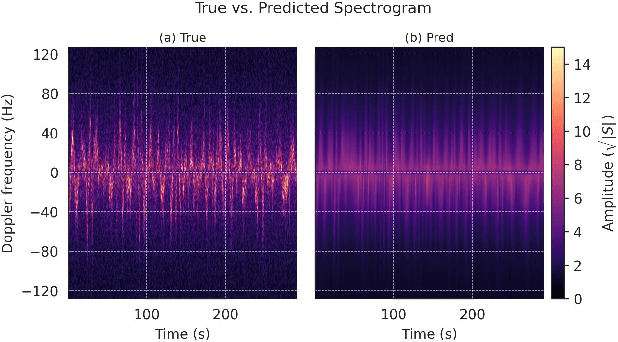
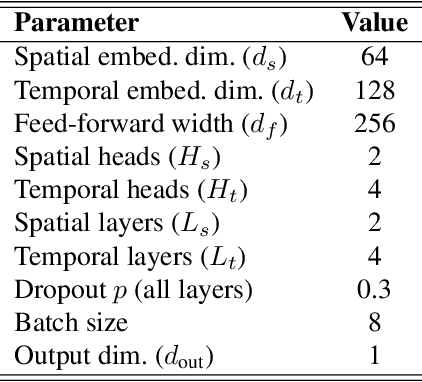
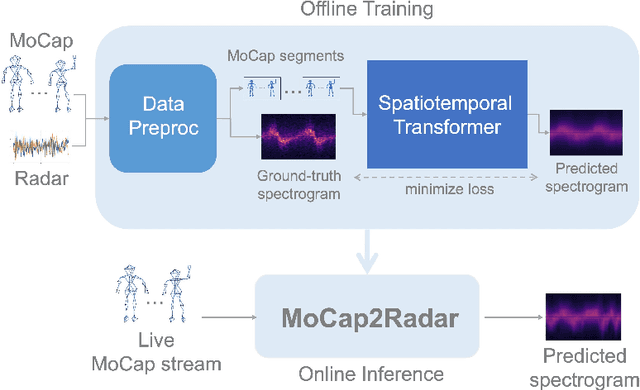
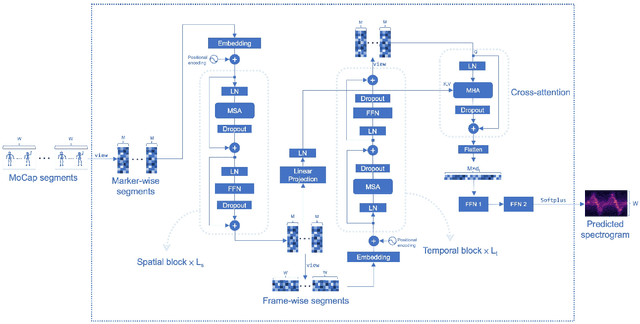
We present a pure machine learning process for synthesizing radar spectrograms from Motion-Capture (MoCap) data. We formulate MoCap-to-spectrogram translation as a windowed sequence-to-sequence task using a transformer-based model that jointly captures spatial relations among MoCap markers and temporal dynamics across frames. Real-world experiments show that the proposed approach produces visually and quantitatively plausible doppler radar spectrograms and achieves good generalizability. Ablation experiments show that the learned model includes both the ability to convert multi-part motion into doppler signatures and an understanding of the spatial relations between different parts of the human body. The result is an interesting example of using transformers for time-series signal processing. It is especially applicable to edge computing and Internet of Things (IoT) radars. It also suggests the ability to augment scarce radar datasets using more abundant MoCap data for training higher-level applications. Finally, it requires far less computation than physics-based methods for generating radar data.
The micro-Doppler Attack Against AI-based Human Activity Classification from Wireless Signals
Jul 28, 2025A subset of Human Activity Classification (HAC) systems are based on AI algorithms that use passively collected wireless signals. This paper presents the micro-Doppler attack targeting HAC from wireless orthogonal frequency division multiplexing (OFDM) signals. The attack is executed by inserting artificial variations in a transmitted OFDM waveform to alter its micro-Doppler signature when it reflects off a human target. We investigate two variants of our scheme that manipulate the waveform at different time scales resulting in altered receiver spectrograms. HAC accuracy with a deep convolutional neural network (CNN) can be reduced to less than 10%.
Deep Learning-based Human Gesture Channel Modeling for Integrated Sensing and Communication Scenarios
Jul 09, 2025With the development of Integrated Sensing and Communication (ISAC) for Sixth-Generation (6G) wireless systems, contactless human recognition has emerged as one of the key application scenarios. Since human gesture motion induces subtle and random variations in wireless multipath propagation, how to accurately model human gesture channels has become a crucial issue for the design and validation of ISAC systems. To this end, this paper proposes a deep learning-based human gesture channel modeling framework for ISAC scenarios, in which the human body is decomposed into multiple body parts, and the mapping between human gestures and their corresponding multipath characteristics is learned from real-world measurements. Specifically, a Poisson neural network is employed to predict the number of Multi-Path Components (MPCs) for each human body part, while Conditional Variational Auto-Encoders (C-VAEs) are reused to generate the scattering points, which are further used to reconstruct continuous channel impulse responses and micro-Doppler signatures. Simulation results demonstrate that the proposed method achieves high accuracy and generalization across different gestures and subjects, providing an interpretable approach for data augmentation and the evaluation of gesture-based ISAC systems.
Through-the-Wall Radar Human Activity Recognition WITHOUT Using Neural Networks
Jun 05, 2025After a few years of research in the field of through-the-wall radar (TWR) human activity recognition (HAR), I found that we seem to be stuck in the mindset of training on radar image data through neural network models. The earliest related works in this field based on template matching did not require a training process, and I believe they have never died. Because these methods possess a strong physical interpretability and are closer to the basis of theoretical signal processing research. In this paper, I would like to try to return to the original path by attempting to eschew neural networks to achieve the TWR HAR task and challenge to achieve intelligent recognition as neural network models. In detail, the range-time map and Doppler-time map of TWR are first generated. Then, the initial regions of the human target foreground and noise background on the maps are determined using corner detection method, and the micro-Doppler signature is segmented using the multiphase active contour model. The micro-Doppler segmentation feature is discretized into a two-dimensional point cloud. Finally, the topological similarity between the resulting point cloud and the point clouds of the template data is calculated using Mapper algorithm to obtain the recognition results. The effectiveness of the proposed method is demonstrated by numerical simulated and measured experiments. The open-source code of this work is released at: https://github.com/JoeyBGOfficial/Through-the-Wall-Radar-Human-Activity-Recognition-Without-Using-Neural-Networks.
Modeling Micro-Doppler Signature of Multi-Propeller Drones in Distributed ISAC
Apr 07, 2025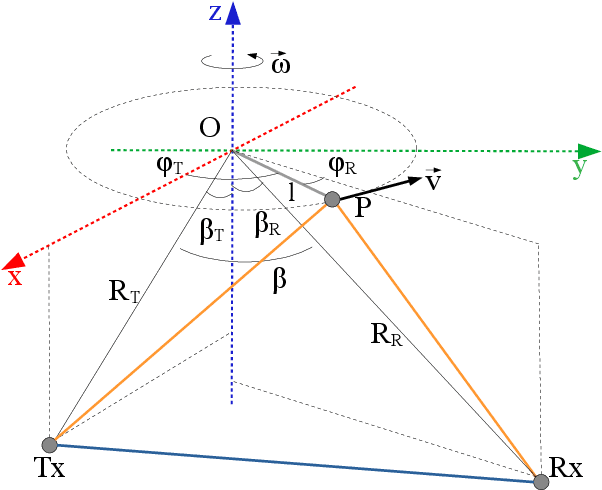
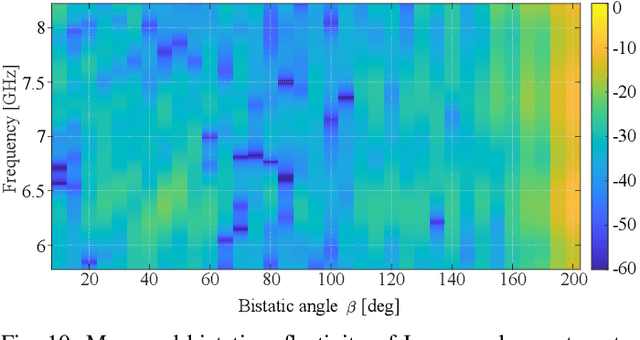
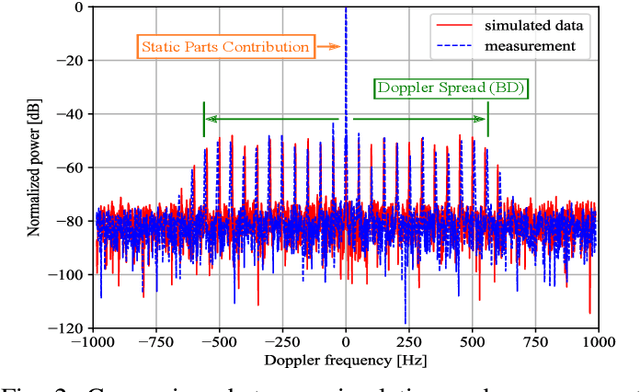
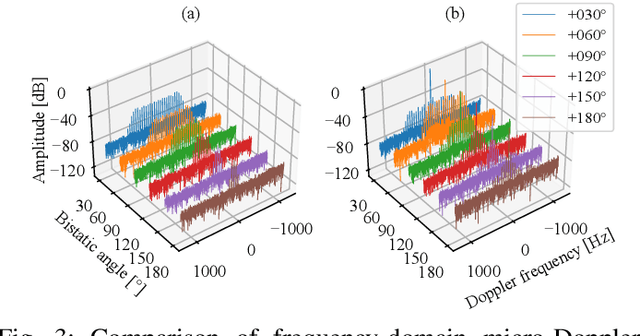
Integrated Sensing and Communication (ISAC) will be one key feature of future 6G networks, enabling simultaneous communication and radar sensing. The radar sensing geometry of ISAC will be multistatic since that corresponds to the common distributed structure of a mobile communication network. Within this framework, micro-Doppler analysis plays a vital role in classifying targets based on their micromotions, such as rotating propellers, vibration, or moving limbs. However, research on bistatic micro-Doppler effects, particularly in ISAC systems utilizing OFDM waveforms, remains limited. Existing methods, including electromagnetic simulations often lack scalability for generating the large datasets required to train machine learning algorithms. To address this gap, this work introduces an OFDM-based bistatic micro-Doppler model for multi-propeller drones. The proposed model adapts the classic thin-wire model to include bistatic sensing configuration with an OFDM-like signal. Then, it extends further by incorporating multiple propellers and integrating the reflectivity of the drone's static parts. Measurements were performed to collect ground truth data for verification of the proposed model. Validation results show that the model generates micro-Doppler signatures closely resembling those obtained from measurements, demonstrating its potential as a tool for data generation. In addition, it offers a comprehensive approach to analyzing bistatic micro-Doppler effects.